
Meeting Room Abuse: How the WASH Index Exposes Hidden Space Waste
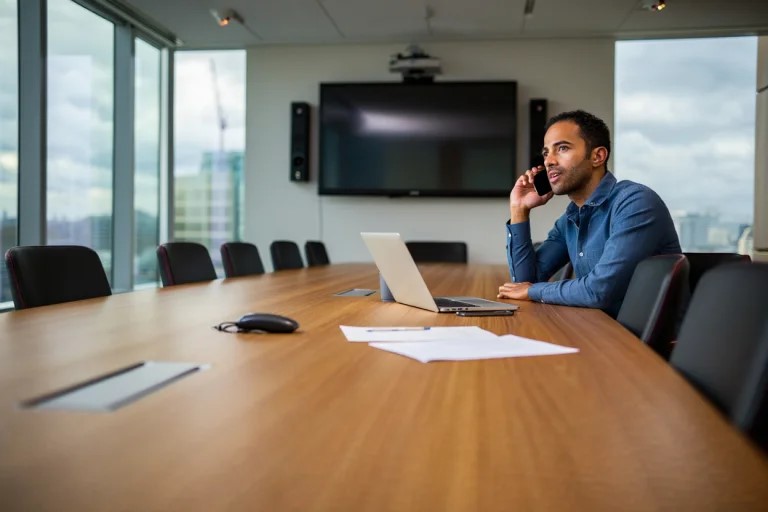
In today’s hybrid workplace, where the office is increasingly a destination for collaboration, meeting room utilization has become one of the most pressing workplace challenges. Meeting rooms are the most contested resource in the building — yet a hidden drain on space persists that many workplace leaders struggle to address: meeting room abuse.
This silent, often unintentional misuse of shared spaces — a single person occupying a 10-seat room for a phone call, a team of two booking a boardroom for a quick chat — creates false scarcity, blocks collaboration, and drives unnecessary real estate costs. Understanding and measuring these patterns through occupancy data is no longer optional. It’s essential.
The Two Faces of Meeting Room Abuse
Meeting room abuse typically takes two forms, both of which distort how organizations perceive their space needs:
- Booked but underutilized: A room is officially reserved but hosts far fewer people than its capacity. A common example: an executive books a 10-person conference room for a private video call. The calendar shows the room as “in use,” but its seating capacity is almost entirely wasted.
- Occupied without reservation: A meeting runs over, or someone casually claims an unbooked room for personal use. These ad-hoc sessions may feel harmless but result in frustrated teams who need the space and can’t access it — even though no booking appears in the calendar.
These behaviors might seem isolated. But they accumulate into a much larger problem: a workspace that feels full, even when it’s not.
The Real Cost of Wasted Meeting Space
Facility managers and workplace strategists often face mounting pressure to “solve” perceived meeting room shortages. The instinctive response? Add more rooms. But in today’s real estate climate, adding square footage is an expensive move that demands solid justification.
And here’s the problem: abuse events skew the data. Rooms appear unavailable even when they aren’t being used effectively. Without granular meeting room occupancy data, organizations risk expanding their footprint unnecessarily — spending millions on real estate based on false demand signals.
The gap between booked capacity and actual occupancy is where the money hides.
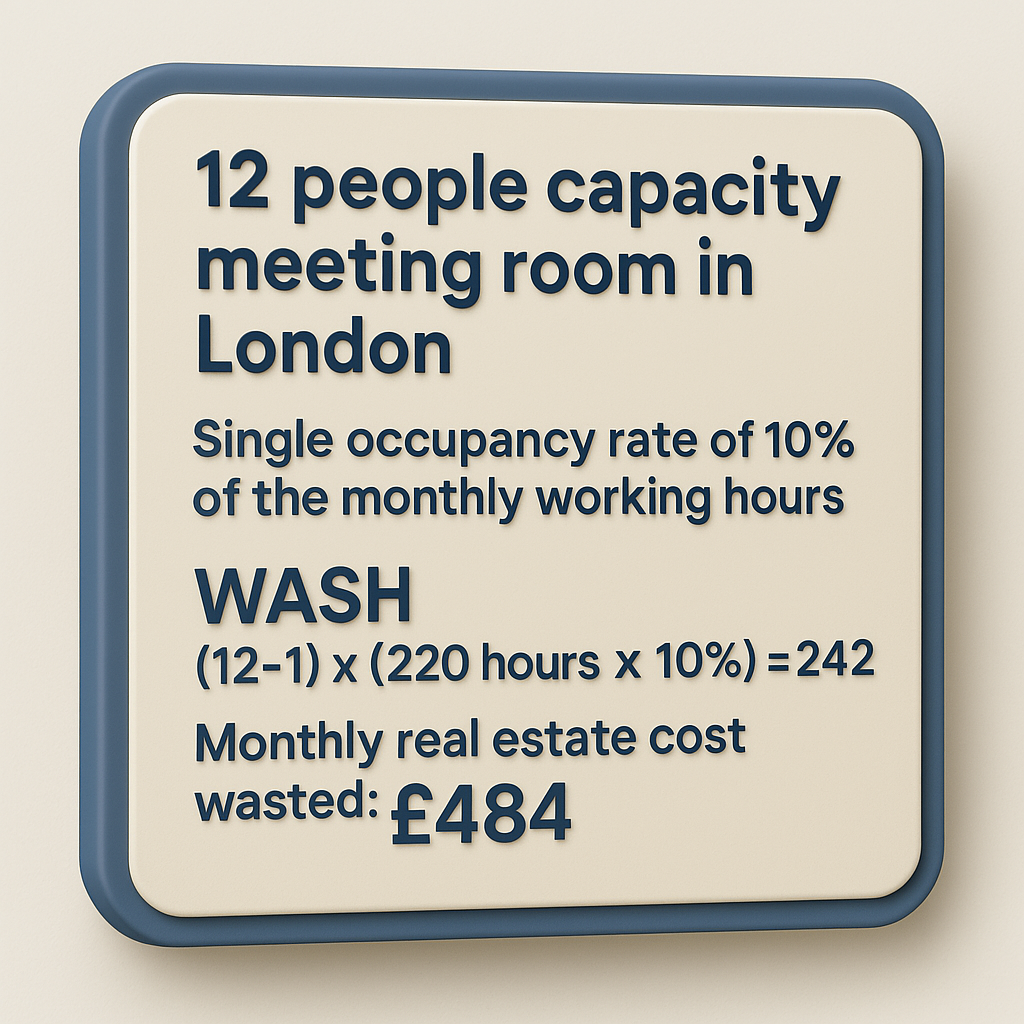
Introducing the WASH Index: Wasted Available Seat Hours
To give workplace teams a concrete way to measure this problem, PointGrab developed the WASH Index — Wasted Available Seat Hours. It’s a metric that quantifies how much meeting room capacity goes unused due to single-occupancy events in multi-seat spaces.
The WASH Index calculates the total available seat-hours across your meeting rooms and highlights instances where single occupants are consuming multi-seat spaces. This gives organizations the ability to:
- Quantify the real scale of misuse — not through anecdotes or walkthrough impressions, but with hard numbers backed by continuous occupancy sensor data.
- Benchmark performance — compare floors, buildings, or regions against each other or against industry averages.
- Identify hotspots — pinpoint which zones, room types, or time slots experience the most waste.
- Set actionable KPIs — establish targets for meeting room utilization improvement and track progress over time.
What the Data Shows: The 15% Benchmark
PointGrab’s customer data reveals a consistent pattern: approximately 15% of meeting room time across floors is affected by single-occupancy abuse. The exact figure varies by layout, room size mix, cultural norms, and regional differences — but the 15% benchmark holds as a reliable starting point across hundreds of deployments.
To put that in perspective: in a typical office with 20 meeting rooms, 15% waste means the equivalent of 3 full rooms are effectively unavailable at any given time — not because they’re being used collaboratively, but because individuals are consuming space designed for groups.
Understanding the Why: Data-Driven Diagnosis
Smart data is just the beginning. Effective meeting room management requires workplace leaders to understand why abuse happens, not just that it happens.
Common root causes include:
- Noise in open-plan areas pushing people into meeting rooms for private calls — a design problem, not a behavior problem.
- Insufficient phone booths or focus rooms creating a legitimate gap that employees fill by occupying meeting rooms.
- Cultural patterns — in some organizations, booking a large room signals status, or teams routinely over-estimate attendance.
- No visibility or accountability — without data, there’s no feedback loop to encourage better booking behavior.
The solution isn’t always punitive. Sometimes the data reveals a legitimate floorplan gap — too few small rooms, insufficient quiet zones, or a mismatch between room sizes and actual meeting patterns. The WASH Index helps leaders make strategic decisions, not just enforce rules.
From Insight to ROI: Small Changes, Big Impact
Reclaiming even a portion of the wasted 15% translates into real savings. Whether it means avoiding a costly office expansion, repurposing underused large rooms into collaboration hubs, or adding phone booths to reduce meeting room pressure — the ROI of addressing office space utilization waste is clear and measurable.
And beyond the financial case, it improves the workplace experience. When spaces are used as intended, employees can focus on what matters — without the frustration of “no available rooms” or the discomfort of asking someone to leave.
One of the most effective structural solutions is increasing the ratio of small, informal meeting spaces. Our guide to huddle room design explains how to size, equip, and optimize these spaces using occupancy data.
How Occupancy Sensors Make This Possible
Calendar data can’t detect meeting room abuse — it only knows what was planned, not what happened. Ceiling-mounted occupancy sensors like PointGrab’s CogniPoint provide the real-time, continuous data needed to calculate the WASH Index accurately.
CogniPoint sensors detect the actual number of occupants in a room at any given moment — not just whether the room is “in use.” This granularity is what separates actionable meeting room analytics from basic booking system reports. Combined with PointGrab’s software-agnostic data layer, the WASH Index data flows into whatever analytics or workplace platform your organization already uses.
Meeting Room Occupancy Sensors: How They Detect Abuse
Not all occupancy sensors are suited to detecting the specific patterns of meeting room abuse. Standard motion sensors (PIR) can confirm a room is occupied but cannot count how many people are present — meaning they cannot calculate whether the room was the right size for the meeting, or measure the gap between booked capacity and actual attendance that the WASH Index requires.
Effective meeting room occupancy sensors need to do three things: count people accurately, report continuously throughout the meeting duration, and operate in a privacy-safe way that earns employee trust. The technology options are:
- Optical AI sensors (recommended) — ceiling-mounted sensors like PointGrab CogniPoint use on-device computer vision to deliver exact headcounts throughout each meeting. Coverage area is up to 3,000 sq ft per device, making them suitable for large conference rooms and boardrooms as well as small huddle spaces. All processing is on-device; no images are stored or transmitted.
- Thermal sensors — provide anonymous headcount estimates without visual data. Good for smaller meeting rooms but less accurate in larger spaces or when people are seated close together.
- Radar sensors at doorways — can count people entering and leaving a room, providing a net occupancy count. Accurate for headcount but cannot provide zone-level data within the room itself.
For calculating the WASH Index, optical AI sensors provide the most reliable input: exact headcounts at every minute of the meeting, precise booking-vs-attendance gaps, and the ability to detect ghost meetings (booked rooms with zero occupants throughout the booking window). This data is what transforms the WASH Index from a theoretical metric into an actionable management tool.
Office meeting room occupancy sensors and conference room occupancy sensors are typically integrated with a workspace management platform or fed directly into a building management system via MQTT or REST API. PointGrab’s software-agnostic data layer ensures the sensor data flows to whatever platform the organisation already uses — from Microsoft Places to Archibus to a custom analytics dashboard.
For a broader view of workplace occupancy sensors beyond meeting rooms — including desk-level, open-plan, and building-wide deployments — see the complete guide.
Ready to learn more? Contact PointGrab for a consultation.
The WASH Index is one piece of a larger picture — combine it with ghost booking detection and occupancy sensor ROI analysis to build a complete space optimisation case.
Frequently Asked Questions
What is the WASH Index?
The WASH Index (Wasted Available Seat Hours) is a metric that quantifies meeting room inefficiency by measuring the gap between booked capacity and actual attendance.
What is meeting room abuse?
Meeting room abuse refers to patterns of booking more space or time than actually needed, wasting valuable real estate resources and reducing availability for others.
How do you calculate Wasted Available Seat Hours?
WASH is calculated by multiplying unused booked seats by the duration of the meeting, revealing how much capacity potential was wasted per booking.
Why do meeting rooms get overbooked?
Employees often book larger rooms to ensure they have space, out of habit, or because they’re unsure of actual attendance. This defensive booking leads to systematic underutilization.
How can occupancy sensors reduce meeting room waste?
Sensors provide data on actual vs. booked attendance, helping organizations implement smart booking policies and educate users about appropriate room selection.
What’s a typical WASH Index for an office?
Organizations commonly see 30–50% of booked meeting room capacity go unused, meaning a significant portion of the WASH Index could be recovered through better space management.
How do you reduce meeting room waste?
Solutions include implementing occupancy-based alerts, adjusting booking policies, creating right-sized room categories, and providing real-time availability dashboards.
What type of sensor is used for meeting room occupancy monitoring?
The most effective sensors for meeting room occupancy monitoring are optical AI sensors (such as PointGrab CogniPoint), which deliver exact real-time headcounts by processing video on-device — with no images stored or transmitted. Thermal sensors are a privacy-friendly alternative for headcount approximation. Radar sensors at doorways provide accurate entry/exit counting. PIR motion sensors are the least suitable for meeting room monitoring as they can only confirm presence, not count people or measure the gap between booked capacity and actual attendance needed for WASH Index calculations.
What is a conference room occupancy sensor and how does it work?
A conference room occupancy sensor is a ceiling-mounted device that detects and counts people in a meeting room in real time, typically feeding data to a workspace management platform or building management system. The sensor continuously reports headcount throughout a meeting — not just a binary occupied/vacant signal — enabling analytics on actual vs. booked attendance, meeting duration, and room right-sizing. The best conference room occupancy sensors use optical AI with on-device processing to deliver exact counts while maintaining employee privacy. PointGrab CogniPoint covers rooms up to 3,000 sq ft from a single ceiling-mounted unit and integrates with any platform via MQTT or REST API.
What is a workplace meeting room occupancy sensor?
A workplace meeting room occupancy sensor combines two functions: detecting that a meeting room is in use (for booking system integration and real-time availability displays) and counting how many people are present (for utilisation analytics and WASH Index calculations). Basic presence sensors only do the first; enterprise-grade optical AI sensors do both. For organisations trying to address meeting room abuse, understand their WASH Index, and make evidence-based decisions about their meeting room inventory, a sensor that delivers continuous headcount data throughout each booking is essential.
What is an office meeting room occupancy sensor?
An office meeting room occupancy sensor is a ceiling-mounted device that detects whether a conference or meeting room is actually occupied — not just booked. Using thermal or optical edge AI technology, it counts the number of people in the room in real time, feeding data into a workplace analytics platform. This enables facility teams to measure no-shows, calculate WASH Index scores, right-size meeting inventory, and reclaim underused space.
